Support MacBook Neo deployments in K–12 with scalable, USB-C–based charging solutions that simplify power management, reduce adapter dependency, and keep student devices powered throughout the school day.
MacBook Neo introduces new opportunities for schools—but also new operational challenges. Without the right charging strategy, districts risk downtime, device loss, and increased IT workload.
MacBook Neo devices are expected to support all-day learning—but real usage often exceeds battery expectations. Without accessible charging, devices can become unavailable during instruction.
Whether devices are assigned, shared, or used across classrooms, schools need charging infrastructure that aligns with how devices are actually used—not just stored.
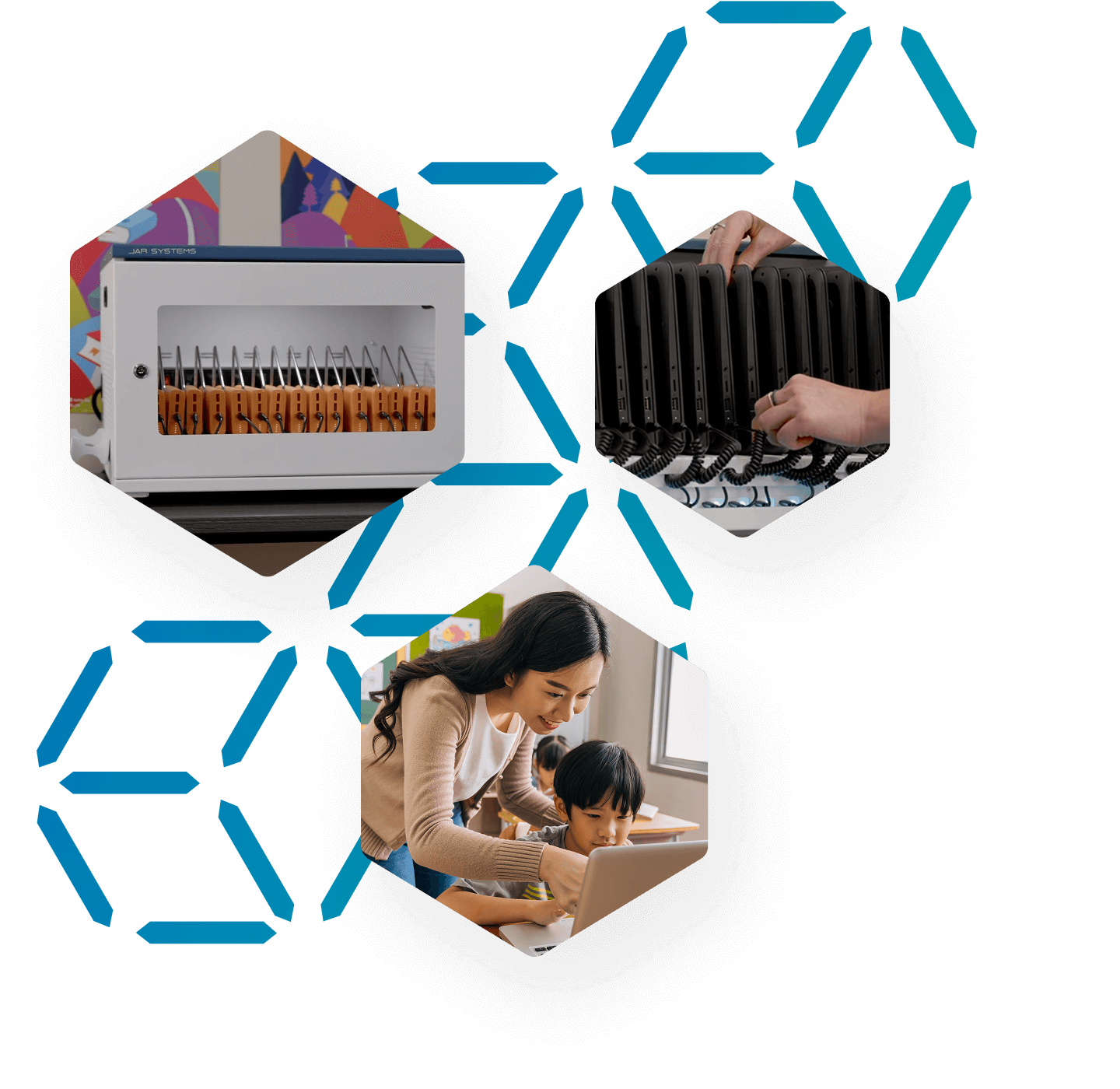
JAR Systems charging solutions are designed for modern USB-C device environments like MacBook Neo—helping schools simplify power management, reduce hardware dependency, and support consistent device availability throughout the day.
MacBook Neo introduces a streamlined, USB-C–based charging standard—but without the right infrastructure, schools can still face cable clutter and adapter management challenges.
JAR Systems solutions deliver direct USB-C charging across multiple devices at once, eliminating the need for individual power bricks and reducing setup complexity.
Charging dozens of devices simultaneously requires more than just outlets—it requires structured, controlled power distribution.
Our charging solutions are designed to manage power efficiently across all connected devices, helping schools avoid overloaded circuits, inconsistent charging, and unnecessary wear on equipment.
Charging solutions need to fit how devices are actually used throughout the school day—not just how they’re stored.
From shared carts to in-class charging stations, JAR Systems supports flexible deployment models that align with MacBook Neo programs, whether devices stay in classrooms or move between them.
JAR Systems charging solutions are designed for modern USB-C device environments like MacBook Neo—helping schools simplify power management, reduce hardware dependency, and support consistent device availability throughout the day.
Key Features:
Key Features:
Need help choosing the right solution?
Talk to a SpecialistDistricts adopting new device types like MacBook Neo are prioritizing flexible, scalable charging infrastructure to ensure long-term success.
"JAR Systems' USB-C charging carts have transformed our classroom technology program. Setup time has been reduced by 75%, and our teachers no longer deal with tangled cables."
Technology Director Riverside Unified School District
"We've deployed JAR charging carts across all our elementary schools. The durability and ease of use have exceeded expectations. Lost charging time is now a thing of the past."
IT Manager Oakwood School District
"The safety features and organized cable management give us peace of mind. JAR Systems understood our needs and delivered a solution that works perfectly for our 1:1 initiative."
Principal Maple Grove Middle School
Expert guidance to help you make informed decisions about classroom charging solutions

Choosing a Chromebook charging cart seems simple—until the devices start coming to school uncharged, carts bottleneck...
Choosing the right charging setup for a K–12 school is not as simple as deciding between one product category or...
Traditional extracurricular activities like football and debate have been cornerstones of student engagement. Now, a...
The MacBook Neo is expected to be a lower-cost Apple laptop designed to compete with devices like Chromebooks in K–12 environments. Schools may use MacBook Neo devices for 1:1 programs, classroom sets, or shared device models, depending on their deployment strategy. Like other modern student devices, it is anticipated to support USB-C charging, making it compatible with scalable charging solutions used across schools.
Yes, if MacBook Neo devices support USB-C Power Delivery (PD), they can be charged using USB-C charging carts designed for multi-device environments. These carts deliver power directly through USB-C connections, eliminating the need for individual AC adapters and simplifying cable management within the cart.
In many cases, yes. Even with improved battery life, schools still rely on charging carts to securely store, organize, and charge multiple devices at once—especially in shared or classroom-based deployments. Charging carts also help standardize charging routines and reduce device downtime between classes or overnight.
The best approach depends on how devices are used. Many schools adopt a layered charging strategy:
This combination helps ensure devices remain powered without disrupting instruction.
Compatibility depends on the type of charging infrastructure already in place. If a school is using USB-C charging solutions that support Power Delivery (PD), they will likely be compatible with MacBook Neo devices. Older AC-based charging setups that rely on individual power adapters may require more management and may not provide the same level of efficiency or scalability.
In 1:1 programs, students often take devices home, so charging primarily happens offsite. However, schools still benefit from having in-class charging stations or backup charging solutions available. This ensures students can recharge devices during the day if needed and helps prevent disruptions caused by uncharged devices.
Charging carts and charging stations serve different purposes:
Many schools use both to support different parts of the school day.
Chris Bailey
Director of Technology
Edmonds School District, WA
Stay Plugged In
Learn
Partners
Industries
Get Support