Future-proof your classroom technology with scalable USB-C charging solutions that simplify device management, reduce AC adapter dependency, and support Chromebooks, MacBook Neo, Windows laptops, tablets, and other modern USB-C devices.
As schools adopt newer Chromebooks, laptops, tablets, and emerging classroom technology, USB-C has become the standard for device charging. Standardizing on USB-C charging simplifies deployment, reduces hardware complexity, and provides greater flexibility as technology continues to evolve.
Replace multiple charging standards with a single USB-C infrastructure that supports a wide variety of classroom devices.
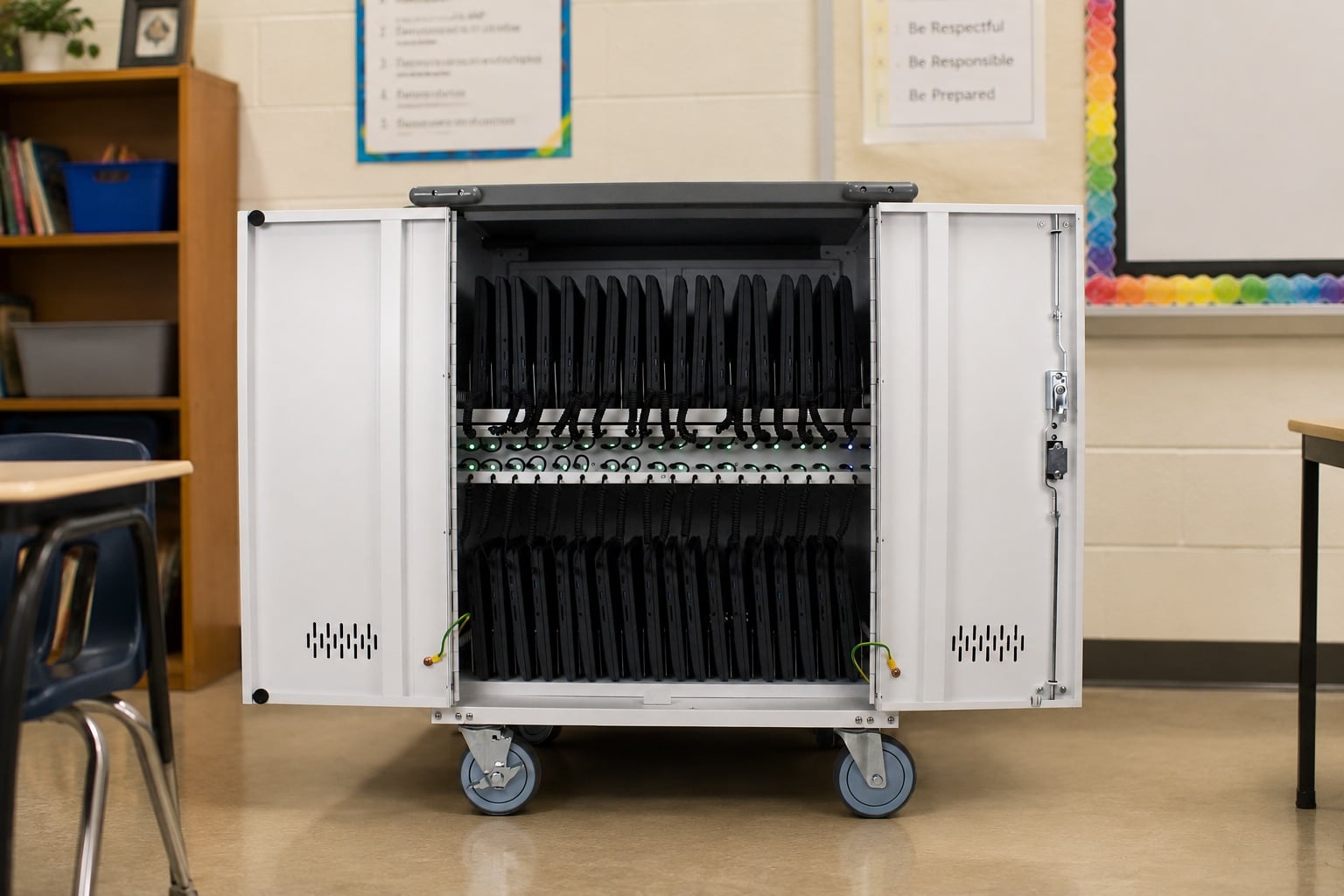
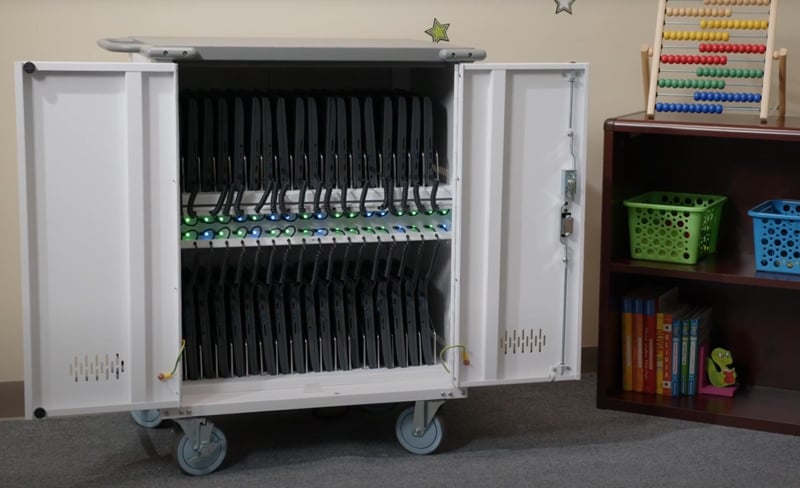
Integrated USB-C charging eliminates the need to manage individual power bricks, helping schools reduce cable clutter, lost adapters, and maintenance costs.
Invest in charging infrastructure designed to support today's USB-C devices while remaining flexible for future technology refreshes.
JAR Systems USB-C charging solutions are designed to support modern classroom technology by simplifying power management, improving device availability, and providing flexible charging options for K–12 learning environments.
USB-C Power Delivery provides efficient charging for compatible laptops, Chromebooks, tablets, and other classroom devices using a single charging standard.
Many schools manage classrooms with multiple device brands and models. Our USB-C charging solutions help standardize charging across compatible Chromebooks, Windows laptops, MacBook Neo devices, tablets, and more.
From mobile charging carts to classroom charging stations and portable power solutions, JAR Systems offers charging options that adapt to a variety of instructional models.
Whether you're charging classroom sets, supporting 1:1 initiatives, or providing power during instruction, JAR Systems offers USB-C charging solutions designed for every learning environment.
Key Features:
Key Features:
Need help choosing the right solution?
Talk to a SpecialistDistricts adopting new device types are prioritizing flexible, scalable charging infrastructure to ensure long-term success.
"It’s made a night and day difference in getting these things deployed and in use. We know we have a partner—not just someone selling us a product."
Director of Technology and Information Services Hernando County School District
"I haven’t seen a single cart ticket this year. It’s night and day from where we were before JAR Systems."
Program Supervisor / IT Manager Detroit Public Schools
"State testing has been a breeze this year because of JAR Systems. My productivity has increased a great deal because I don't have dead devices anymore. It’s amazing what a simple change can do."
Lead US History Teacher Westside High School, Duval County Public Schools
Expert guidance to help you make informed decisions about classroom charging solutions
When schools evaluate Chromebook charging solutions, safety is often assumed from safety certification labels—not...
Choosing a Chromebook charging cart seems simple—until the devices start coming to school uncharged, carts bottleneck...

Choosing the right charging setup for a K–12 school is not as simple as deciding between one product category or...
USB‑C charging uses a small, reversible connector that can deliver both power and data through one cable. Many modern Chromebooks, laptops, tablets, and classroom devices use USB‑C with Power Delivery (PD), a fast‑charging standard that automatically provides the right amount of power for each device.
Yes. USB-C charging solutions can support many compatible Chromebooks, Windows laptops, Apple devices, tablets, and other USB-C classroom technology, helping schools standardize charging across mixed-device environments.
USB-C Power Delivery is a charging standard that intelligently delivers the appropriate amount of power to compatible devices, providing efficient and reliable charging for modern classroom technology.
Charging carts are mobile, lockable units designed to store, secure, and charge large sets of devices. They’re used to move full classroom sets within a classroom or between rooms. Charging stations are typically fixed or semi‑fixed units that provide easy, in‑class charging so students can keep devices powered during instruction without disrupting learning.
Because USB-C has become the industry standard for many modern laptops and tablets, USB-C charging infrastructure helps schools prepare for future device refreshes while reducing the need for new charging equipment.
By eliminating individual AC power adapters, standardizing charging infrastructure, and simplifying cable management, USB-C charging solutions reduce maintenance, troubleshooting, and device deployment complexity for school IT teams.
Chris Bailey
Director of Technology
Edmonds School District, WA
Stay Plugged In
Learn
Partners
Industries
Get Support