
For more than a decade, 1:1 device initiatives have been a cornerstone of K–12 technology strategy. Giving every student access to a laptop or tablet—both at school and at home—helped expand digital learning, improve educational equity, and support instruction beyond the classroom.
Today, however, that model is being reevaluated.
Growing concerns about student screen time have shifted the conversation from how to provide more access to technology to how technology should be used most effectively. Parents, educators, school boards, and lawmakers are all weighing in, prompting many districts to reconsider long-standing device policies.
While the debate often focuses on student well-being and instructional practices, it also raises an important operational question:
What happens when more devices stay at school instead of going home?
A New Conversation Around Student Device Use
Across the country, discussions surrounding student screen time are influencing education policy in ways that were difficult to imagine just a few years ago.
Some states have introduced or passed legislation that limits device use during portions of the school day, encourages reduced screen exposure in younger grades, or prompts districts to reevaluate take-home device programs. At the same time, many school systems are independently reviewing their own technology policies in response to changing community expectations.
For technology leaders, this doesn't necessarily mean abandoning digital learning. Instead, it signals a shift toward more intentional device use—where technology supports instruction without becoming the center of every learning experience.
As these conversations continue, many districts are exploring alternatives such as:
- In-class-only device programs
- Shared classroom device sets in elementary grades
- Reduced take-home access
- More flexible deployment models based on grade level or instructional need
These changes affect far more than classroom instruction—they reshape how devices are managed across the district.
What These Policy Changes Mean for School Technology Programs
When students charged their devices at home, schools could focus primarily on device deployment and support.
As more devices remain on campus, districts inherit a new set of responsibilities.
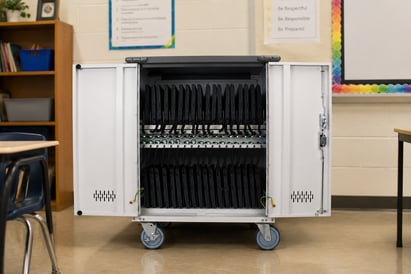 Technology teams may need to plan for:
- Significantly greater overnight charging capacity
- Increased device storage requirements
- More centralized charging workflows
- Additional cable management and maintenance
- Ensuring every device is ready for instruction the following morning
For large districts, this can represent thousands of additional devices requiring reliable overnight charging every day.
The shift may appear simple from a policy perspective, but operationally it changes how schools think about infrastructure.
The Infrastructure Challenge Few Districts Planned For
One of the biggest hidden impacts of changing device policies is charging.
Many districts built their technology programs around the assumption that students would recharge devices at home. If devices begin spending more time on campus, that responsibility shifts back to the district.
That change creates new questions:
- Do existing charging carts provide enough capacity?
- Can current infrastructure support additional overnight charging?
- How much additional IT oversight will be required?
- Will older charging equipment still meet today's needs?
For districts that retired older charging carts years ago—or dramatically reduced their use—these questions may become part of future technology planning.
Charging infrastructure, once considered a background consideration, is becoming a strategic component of classroom readiness.
Why This Doesn't Mean Going Backward
For many educators, the idea of bringing more devices back to campus may feel like a return to an earlier era of classroom technology.
But charging technology has evolved considerably.
The charging carts many districts remember were often built around individual AC power adapters, bulky wiring, tangled cables, and time-consuming maintenance.
Today's USB-C Power Delivery (PD) charging solutions are fundamentally different.
Modern charging systems can provide:
- USB-C Power Delivery without individual AC adapters
- Intelligent power distribution across multiple devices
- Cleaner cable management
- Simplified maintenance
- Support for mixed-device environments
- Scalable charging that grows with district needs
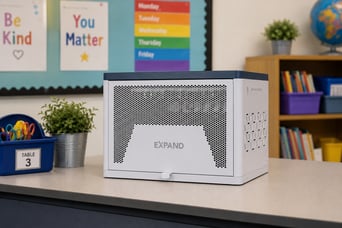 For example, JAR Systems' USB-C Power Delivery charging carts and charging stations are designed to help districts expand overnight charging capacity while eliminating many of the maintenance challenges associated with older AC adapter-based charging systems.
As districts adapt to changing device policies, modern charging infrastructure allows them to increase on-campus charging without returning to outdated technology.
Preparing for a More Flexible Future
No one can predict exactly how screen-time legislation or district technology policies will evolve over the next several years.
Some schools may continue supporting take-home devices across all grade levels. Others may adopt hybrid models that combine shared classroom sets, in-class-only deployments, and traditional 1:1 programs depending on student age and instructional goals.
The common thread is flexibility.
Technology infrastructure should be designed to support changing instructional models—not a single policy decision.
Districts that invest in scalable USB-C charging systems today will be better positioned to adapt as classroom technology continues to evolve, whether that means supporting more overnight charging, expanding shared device programs, or accommodating future device refreshes.
As conversations around student screen time continue, one thing is becoming increasingly clear:
The future of school technology isn't just about the devices students use—it's also about the infrastructure that keeps those devices ready for learning.
As device policies evolve, make sure your charging infrastructure is ready to evolve with them. JAR Systems helps districts build flexible USB-C charging solutions that support today's classrooms—and tomorrow's technology strategies.